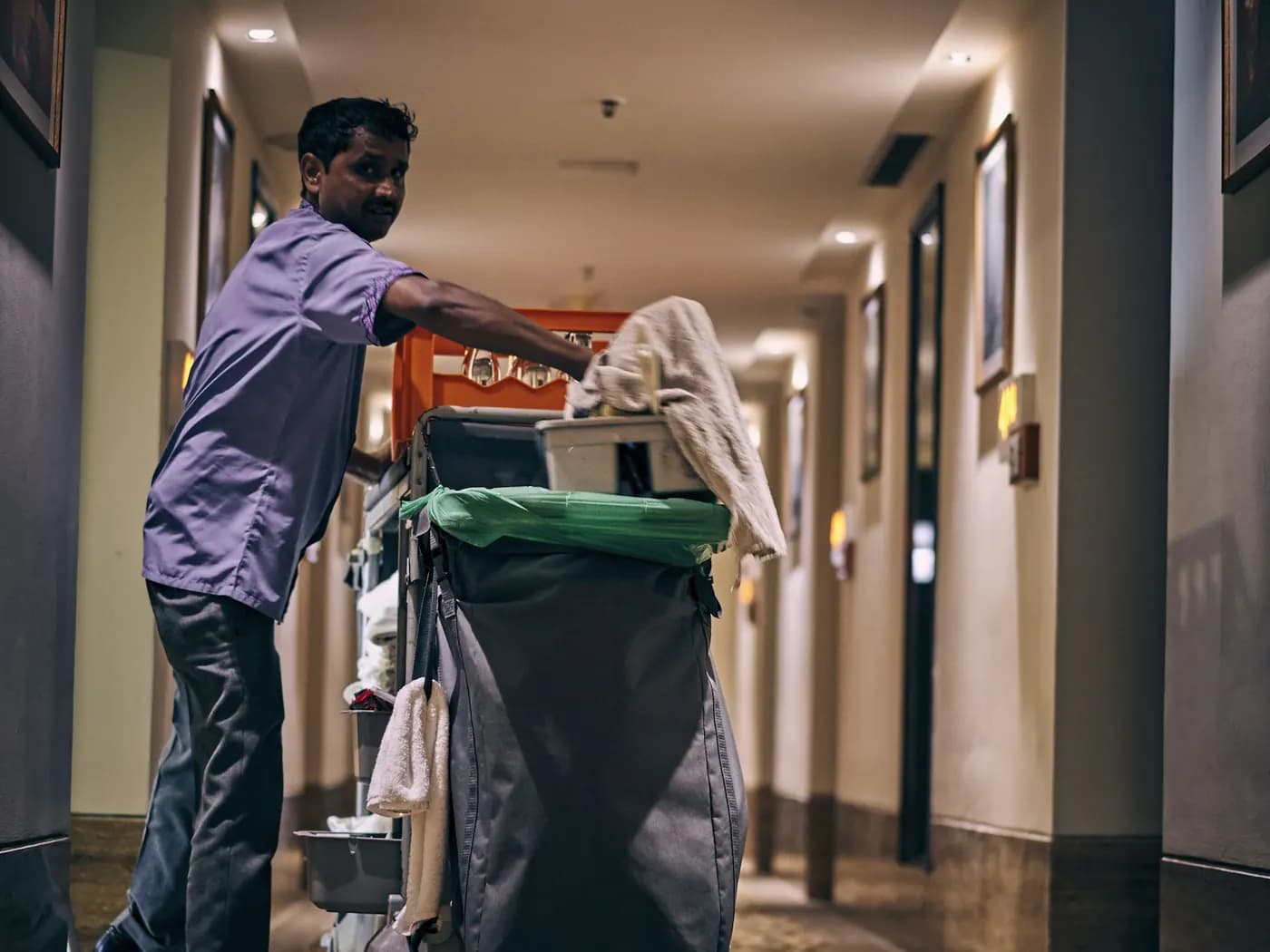
Housekeeping
Chemicals, disposables and room consumables, held to one specification across properties.
- Cleaning chemicals
- Wipes and disposables
- Bin liners and waste
- Mops, brooms and consumables
Industries
Keep recurring operational procurement predictable, governed and available when the floor needs it, across one property or a group of them.
Who this is for

Every room, every day
is a consumption event
The industry problem
A property does not stop because a rate was not negotiated. It stops because housekeeping opened the store and the item was not there. That makes availability the operational requirement, and availability is what ad hoc purchasing is worst at.
Procurement fragmentation
Each step is reasonable on its own. Together they are why group rates do not survive contact with a shift.
Happens at: Property
Happens at: Property.What it looks like: Noticed on the floor, mid-shift
Left holding it
Housekeeping
Happens at: Property
Happens at: Property.What it looks like: Bought locally, at the local rate
Left holding it
Property purchase
Happens at: Property
Happens at: Property.What it looks like: Whatever was available, not what was agreed
Left holding it
Housekeeping
Happens at: Property
Happens at: Property.What it looks like: After the fact, because the shift could not wait
Left holding it
General manager
Happens at: Central
Happens at: Central.What it looks like: Off-contract spend, one property at a time
Left holding it
Finance
Happens at: Central
Happens at: Central.What it looks like: Drift discovered at audit, not at order
Left holding it
You
Read the last column downwards.
The problem does not only get worse.
It gets wider, until it reaches you.
What changes with Nxtby
The fix for an urgent local purchase is not a stricter rule about urgent local purchases. It is replenishment sized to actual consumption, so the store does not reach the point where one is required.
How it runs today
With Nxtby
Replenishment triggered by a stock-out
Replenishment scheduled to consumption
Local purchase at the local rate
Contracted rate across properties
Specification substituted under pressure
One specification, held per category
Approval recorded after the spend
Approval built into the request
Off-contract spend found at audit
Off-catalogue orders flagged as exceptions
Availability is a procurement design decision, not a shift-level improvisation.
From the site that raises it to the record that comes back. Everything after the contract is settled before the order is placed.
Step 1: Site requirement
A site raises what it needs, in the catalogue's words rather than its own.
Step 2: Contract
Commercial terms, items and suppliers agreed once, before the first order.
Step 3: Agreed rate
The contracted rate applies at every location, so price is not renegotiated per order.
Step 4: Governed catalogue
Each location orders from an approved list set up for that location.
Step 5: Approval
Requests route to the approver your own rules name, by role and value.
Step 6: Order
Approved requests become orders at the contracted rate.
Step 7: Invoice
Consolidated GST-compliant invoicing, traceable to each order and location.
Step 8: Visibility
Spend by location and category, visible as it happens.
See what one contracted position would look like for your properties.
Categories
Three recurring categories, run under one contract with one rate and one approved supplier list. Each is set up per location, so what a site can order is what that site actually needs.
Chemicals, disposables and room consumables, held to one specification across properties.
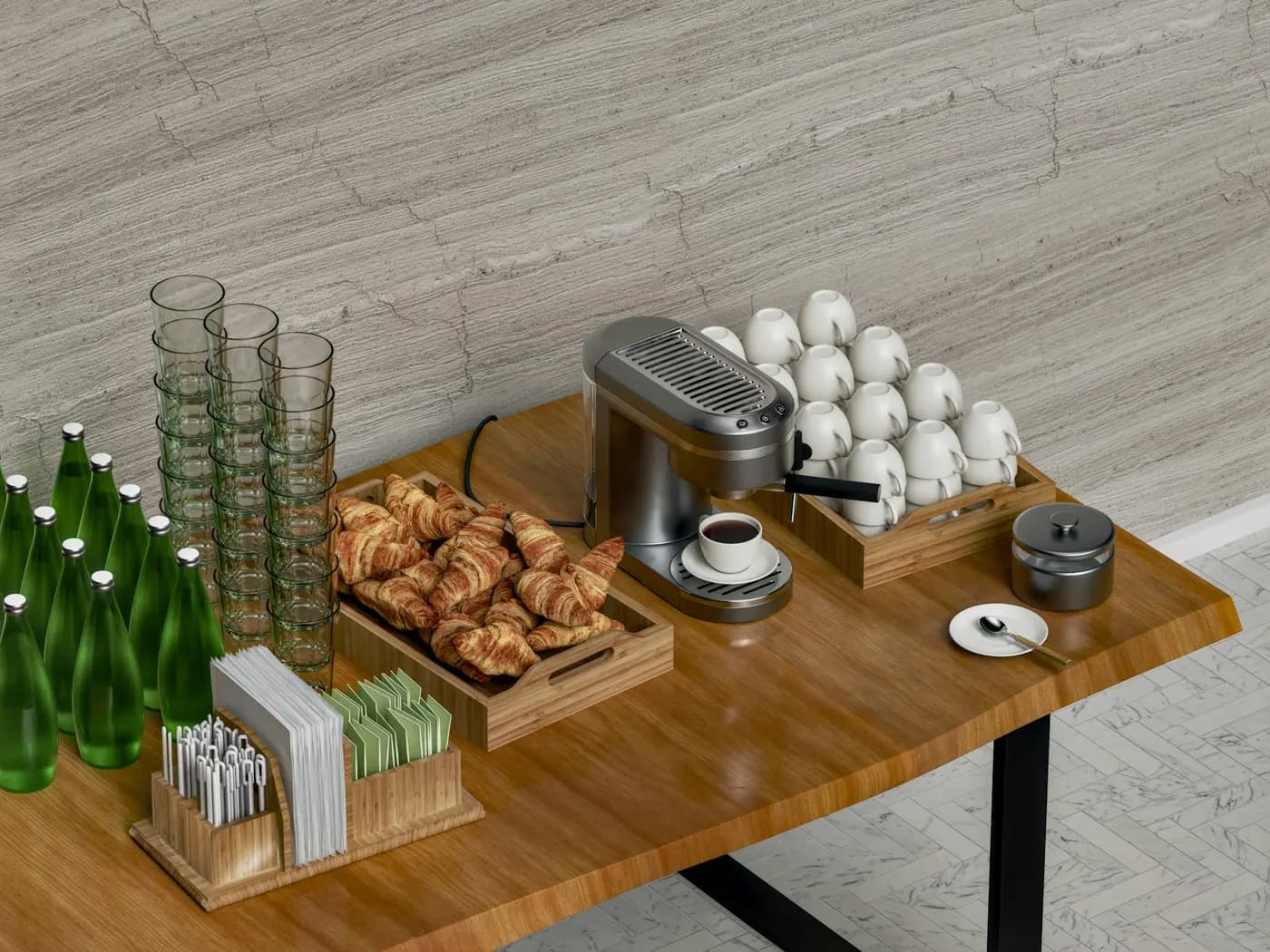
Back-of-house pantry, staff cafeteria and non-kitchen beverage supply.
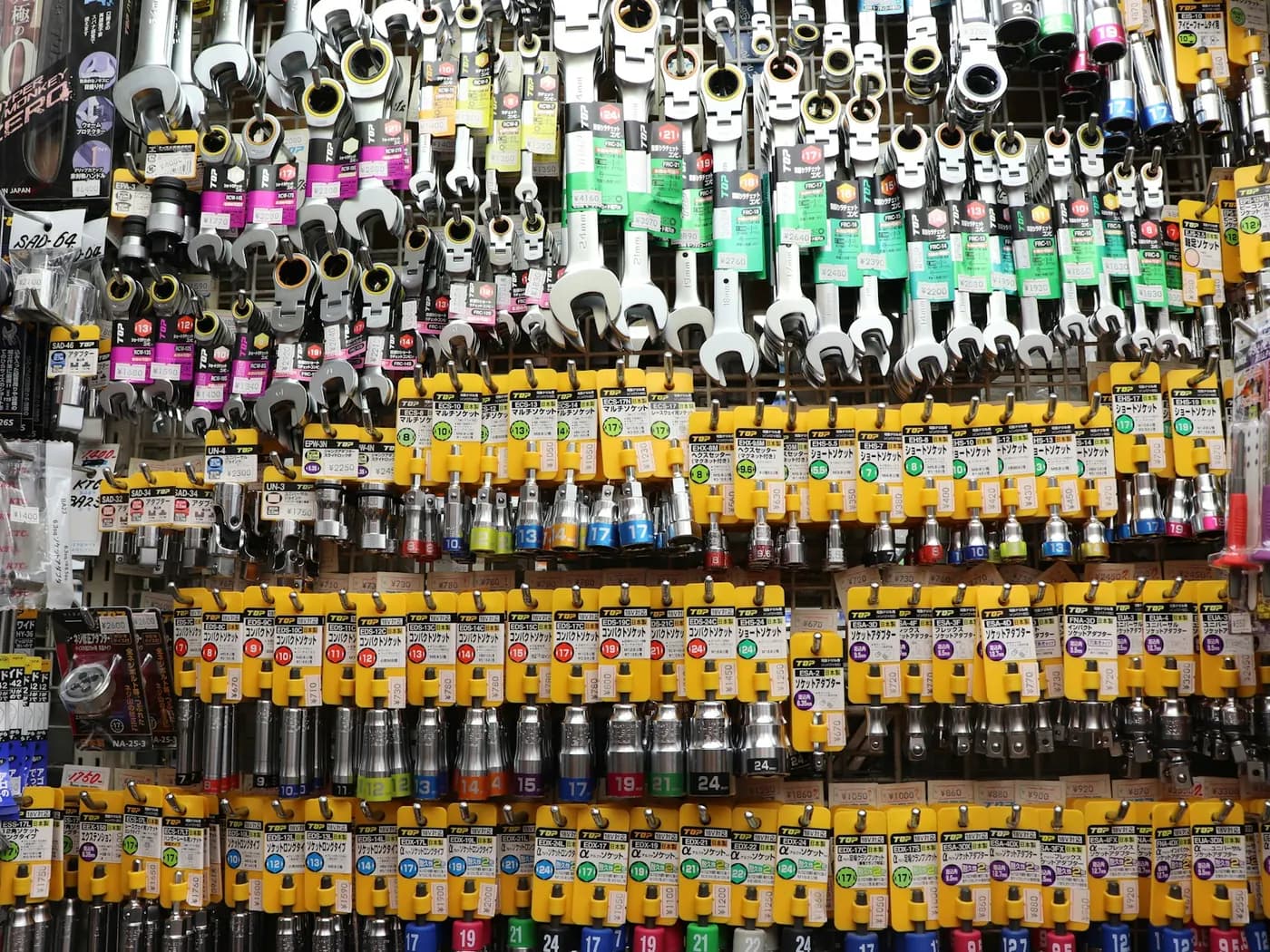
Engineering, electricals, sanitary and maintenance stock for the property and its plant rooms.
Procurement workflow
The same six steps every time, for every site and every category. Select a step to see what it looks like in hospitality operations.
Step 1 of 6
Request
A site team raises what it needs against the catalogue and contract already agreed for that location.
In hospitality operations
The housekeeping desk raises a replenishment against the property's agreed specification, not against what is in stock at a local supplier.
Multi-location control
Every property keeps its own store, its own approver and its own replenishment rhythm, on the group's contract.
Locations
Sample view| Property | Categories live | Approver | Replenishment | Spend to date |
|---|---|---|---|---|
| Property, Bengaluru | Housekeeping, Pantry, Facility | General manager | Weekly | Rs 3.2L |
| Property, Pune | Housekeeping, Facility | General manager | Weekly | Rs 2.4L |
| Property, Goa | Housekeeping, Pantry | General manager | Fortnightly | Rs 1.8L |
| Property, Jaipur | Housekeeping, Pantry, Facility | Cluster manager | Weekly | Rs 2.9L |
Supplier management
In hospitality the supplier list is how a brand standard survives. A substitution made on a Tuesday night is a standards decision taken by whoever was on shift.
Approvals & governance
A control that a night shift has to break in order to do its job is not a control. These rules are set so the routine never blocks and the exception is always recorded.
When this happens
Who approves
What happens
Scheduled replenishment, on specification
Housekeeping or stores
Clears immediately. Availability is the priority here.
Above the property value limit
General manager
Held for approval, visible to the property while it waits.
Off-specification substitution
Group operations
Recorded as an exception so standard drift is visible at order, not at audit.
New category at a property
Group procurement
Added to that property's catalogue once, or declined once.
Nxtby does not impose an approval structure. These are your own limits and your own approvers, applied consistently to every request rather than to the ones somebody remembered to route.
Spend visibility
Hospitality consumption is predictable enough to plan from. The reason it usually is not planned from is that nobody has it in time.
SPEND BY CATEGORY, LAST 30 DAYS
Purchase orders
A purchase order carries the site that raised it, the rule it met and the person who approved it. That record is what makes a spend review a reading exercise rather than an investigation.
Purchase orders
Sample viewPO-4821Property, Bengaluru
Housekeeping, scheduled replenishment
PO-4822Property, Pune
Housekeeping, above site limit
PO-4823Property, Goa
Housekeeping, order placed
Approval trail, PO-4822
Use cases
Common scenarios in hospitality operations, and what changes structurally in each. These are illustrative situations rather than named client engagements.
Capabilities
Everything on this list is shown somewhere on this page. If it is not demonstrated above, it is not claimed here.
Answers
The questions a procurement, finance or operations team asks first, answered directly.
Hospitality procurement is the recurring buying that keeps rooms, back-of-house and public areas running: housekeeping consumables, pantry and guest amenities, and facility and maintenance stock. Operational continuity matters more here than in most sectors, because a shortfall shows up in a guest's room.
Nxtby agrees one specification and one contracted rate for each recurring item, sets up scheduled replenishment so properties are not ordering in a hurry, and routes exceptions for approval. Properties keep their own catalogues and approvers under one group contract.
Each property is a location with its own catalogue, approver and delivery point, all under one contract, so a group can hold one standard across properties and still see spend property by property.
The group agrees rates, specifications and approved vendors once. Properties then order against that agreement, off-specification requests are flagged for approval, and invoices are checked against the contract rather than against each property's local quote.
Housekeeping, pantry, and facility supplies are the three most hospitality operators start with, because they are consumed daily in rooms, kitchens and public areas.
Nxtby is a contract-led business procurement partner for enterprises in India that buy the same operational categories repeatedly across several locations. Rate contracts, approved catalogues and service levels are agreed before the first order, your teams raise requests against them, Nxtby runs sourcing and supply, and finance gets consolidated GST-compliant invoicing with a record of every order behind it.
The practical objections that come up when hospitality operations move procurement onto one contract.
Service levels are what the contract sets out, and they are agreed with you before the first order rather than assumed. This page does not publish a guaranteed number because the commitment belongs in your contract, where it is specific to your properties, categories and locations.
It does not police it, it removes the reason for it. Most urgent local purchases exist because replenishment was triggered by a stock-out. When the schedule is sized to actual consumption, the store does not reach that point as often, and when an off-catalogue purchase does happen it is recorded as an exception rather than absorbed.
Yes. The specification sits with the category in the catalogue, so ordering the agreed grade is the default. A substitution has to be made from the catalogue or routed as an exception, which is what makes standard drift visible at the order rather than at an audit.
The categories Nxtby runs are housekeeping, pantry, facility supplies, office and stationery, and IT and electronics. Pantry here means back-of-house and staff pantry supply rather than kitchen food production, which most groups source separately.
No. Nothing is rolled out to housekeeping or stores teams, and the approval structure stays the one the group already uses. Routine replenishment inside the agreed specification and value clears without waiting.
Property orders consolidate into GST-compliant group invoicing instead of arriving as local purchases and per-vendor bills, and every line traces back to the property and the order.
Next step
Tell us how many properties you operate and how housekeeping replenishment is raised today. We will show you what one specification and one rate across the group would look like.
What happens next
You tell us how it runs today
How many properties you operate, which categories are bought repeatedly at each one, and how a request reaches a supplier today.
We come back with the picture
What one contracted position across those categories would look like: the catalogue, the approval limits and where the ordering would stay local.
You decide what, if anything, moves
Most operations start with a single category at a handful of sites. Nothing is committed by having the conversation.
Further reading
Articles from the Nxtby blog that bear on procurement for hospitality operations.


Related industries

Standardize procurement across buildings