
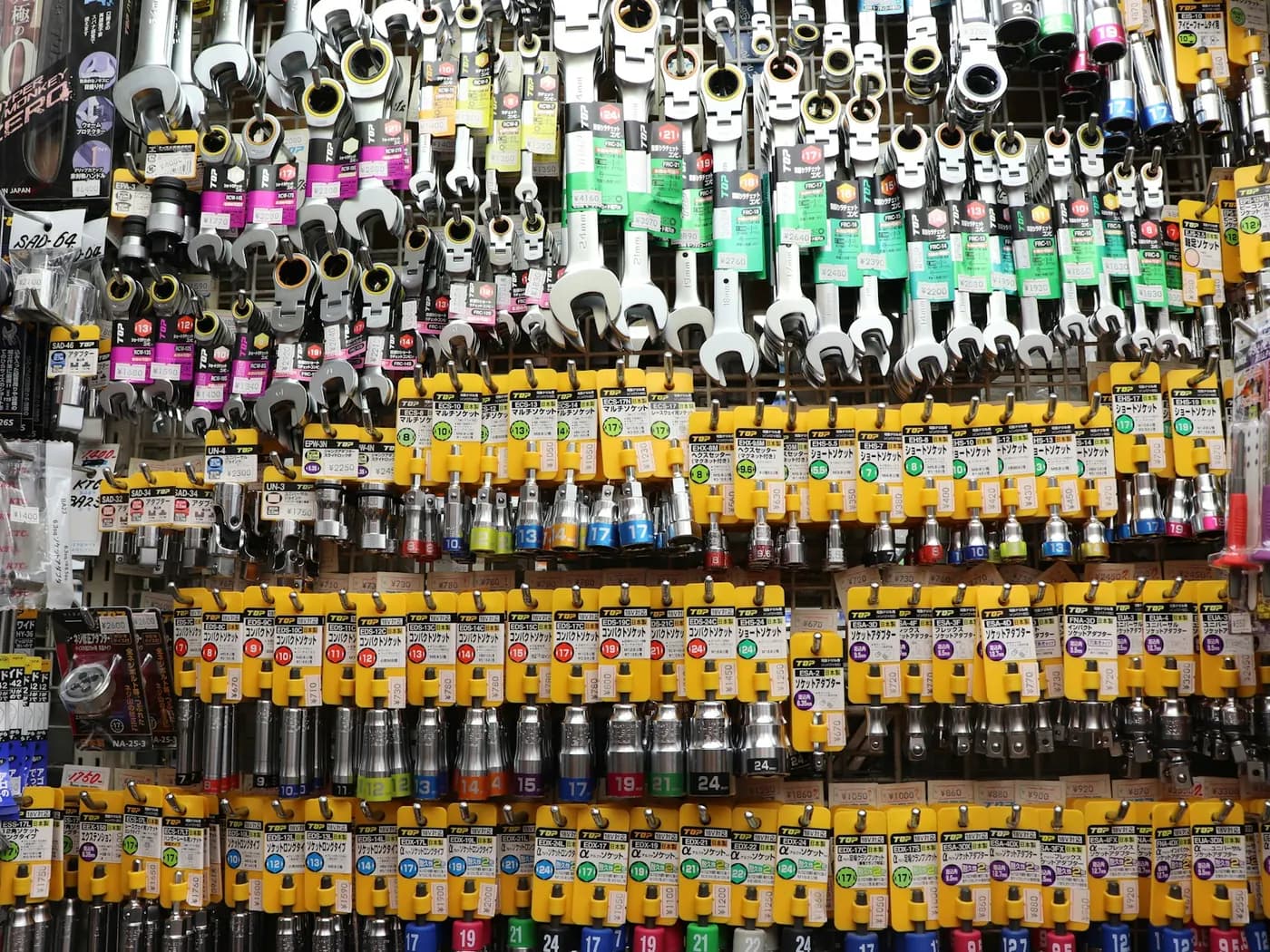
Facility Supplies
Electricals, sanitary, safety, signage and maintenance consumption across plant and offices.
- Electricals and lighting
- Plumbing and sanitary
- Safety and signage
- Tools and maintenance
Industries
Consolidate business suppliers while keeping procurement controlled across plants, offices and the operations that run between them.

Who this is for
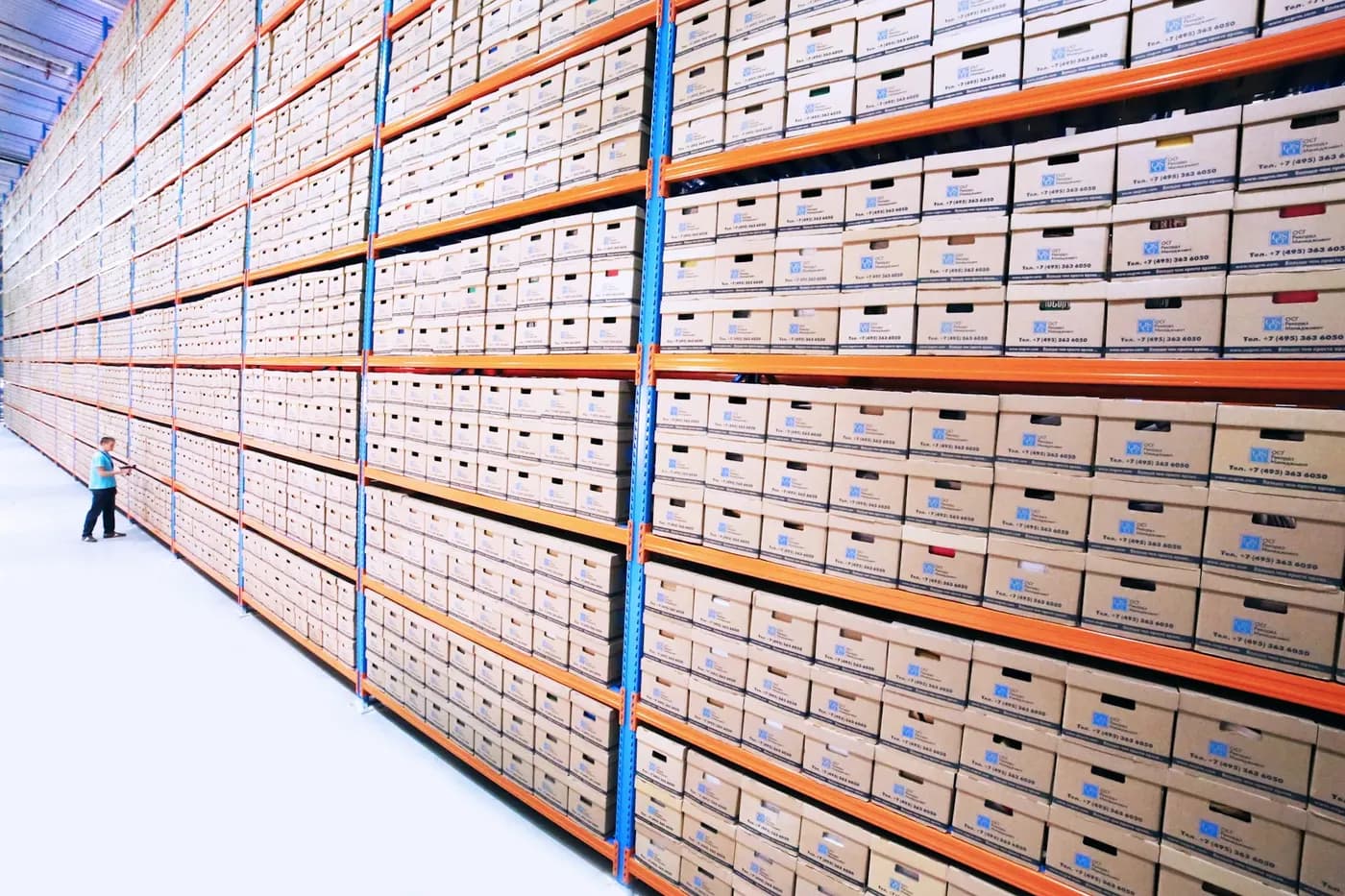
The other spend
beside direct materials
The industry problem
A manufacturer's procurement discipline is usually excellent and usually pointed in one direction. Raw material has owners, contracts and review. The supplies that keep the plant and the offices running accumulate vendors nobody appointed and rates nobody set.
Procurement fragmentation
Nobody decides to have four hundred vendors. It is the sum of individually reasonable choices.
Happens at: Plant or department
Happens at: Plant or department.What it looks like: Small, urgent, specific to the site
Left holding it
Plant team
Happens at: Plant
Happens at: Plant.What it looks like: Nearest capable source, onboarded for one order
Left holding it
Plant purchase
Happens at: Plant
Happens at: Plant.What it looks like: No company reference rate for the category
Left holding it
Plant purchase
Happens at: Central
Happens at: Central.What it looks like: Onboarded once, used occasionally, never removed
Left holding it
Procurement
Happens at: Central
Happens at: Central.What it looks like: Full PO, GRN and payment cycle per small order
Left holding it
Finance
Happens at: Central
Happens at: Central.What it looks like: Spread across too many vendors to negotiate
Left holding it
You
Read the last column downwards.
The problem does not only get worse.
It gets wider, until it reaches you.
What changes with Nxtby
Consolidation is worth doing for the rate. It is worth doing twice over for what it does to processing cost and to governance, because a category bought from one contracted source can finally be controlled the way direct materials already are.
How it runs today
With Nxtby
Many vendors per category, per plant
One contracted source per category
Rates set at plant level
Company rates, applied at every plant
Full processing cycle per small order
Orders consolidated, one invoicing stream
Controls applied to direct spend only
The same governance across categories
Category too fragmented to negotiate
A negotiating position built on your history
The saving is the rate, the processing cost and the control, in that order of visibility and reverse order of value.
From the site that raises it to the record that comes back. Everything after the contract is settled before the order is placed.
Step 1: Site requirement
A site raises what it needs, in the catalogue's words rather than its own.
Step 2: Contract
Commercial terms, items and suppliers agreed once, before the first order.
Step 3: Agreed rate
The contracted rate applies at every location, so price is not renegotiated per order.
Step 4: Governed catalogue
Each location orders from an approved list set up for that location.
Step 5: Approval
Requests route to the approver your own rules name, by role and value.
Step 6: Order
Approved requests become orders at the contracted rate.
Step 7: Invoice
Consolidated GST-compliant invoicing, traceable to each order and location.
Step 8: Visibility
Spend by location and category, visible as it happens.
See what one contracted position would look like for your plants and sites.
Categories
Three recurring categories, run under one contract with one rate and one approved supplier list. Each is set up per location, so what a site can order is what that site actually needs.
Electricals, sanitary, safety, signage and maintenance consumption across plant and offices.

Plant and office IT, peripherals and networking, on one contracted rate rather than per site.

Plant housekeeping, washrooms, canteen areas and administrative blocks.
Procurement workflow
The same six steps every time, for every site and every category. Select a step to see what it looks like in manufacturing operations.
Step 1 of 6
Request
A site team raises what it needs against the catalogue and contract already agreed for that location.
In manufacturing operations
A plant stores team raises a facility supplies requirement against the company catalogue for that site.
Multi-location control
Every site carries its own catalogue, approver and receiving point, under one company contract.
Locations
Sample view| Site | Categories live | Approver | Orders this month | Spend to date |
|---|---|---|---|---|
| Plant I | Facility, Housekeeping, IT | Plant head | 42 | Rs 16.8L |
| Plant II | Facility, Housekeeping | Plant head | 31 | Rs 11.4L |
| Warehouse & despatch | Facility, Housekeeping | Logistics manager | 18 | Rs 4.9L |
| Corporate office | IT, Office, Pantry | Admin head | 23 | Rs 6.2L |
Supplier management
The rate is the visible saving and usually the smallest one. The processing cost of a long tail, and the fact that a fragmented category cannot be governed at all, are the larger two.
Approvals & governance
Nothing here is a new control. It is the governance your procurement function already applies to raw material, extended to the categories that were left out of it.
When this happens
Who approves
What happens
Catalogue item, within plant value limit
Plant stores
Clears without waiting, and is still recorded.
Above the plant value limit
Plant head
Held for approval, visible to the site while it waits.
Off-catalogue requirement
Central procurement
Recorded as an exception rather than becoming a new local vendor.
New category at a site
Central procurement
Added to that site's catalogue once, under the company contract.
Nxtby does not impose an approval structure. These are your own limits and your own approvers, applied consistently to every request rather than to the ones somebody remembered to route.
Spend visibility
Most manufacturers can state their direct material spend precisely and can only estimate this. Measuring it is what makes it negotiable.
SPEND BY CATEGORY, LAST 30 DAYS
Purchase orders
A purchase order carries the site that raised it, the rule it met and the person who approved it. That record is what makes a spend review a reading exercise rather than an investigation.
Purchase orders
Sample viewPO-4821Plant I
Facility Supplies, scheduled replenishment
PO-4822Plant II
Facility Supplies, above site limit
PO-4823Warehouse & despatch
Facility Supplies, order placed
Approval trail, PO-4822
Use cases
Common scenarios in manufacturing operations, and what changes structurally in each. These are illustrative situations rather than named client engagements.
Capabilities
Everything on this list is shown somewhere on this page. If it is not demonstrated above, it is not claimed here.
Answers
The questions a procurement, finance or operations team asks first, answered directly.
For Nxtby, manufacturing procurement means the non-production side of running a plant: facility and MRO supplies, IT and electronics, and housekeeping. It is not raw materials or production inputs. It is the long tail of small vendors that grows at every site.
Nxtby consolidates that long tail onto approved vendors at governed rates, gives each plant its own catalogue and approvers, and coordinates fulfilment to each site. Plants keep the ability to raise what they need; the company keeps one vendor list and one record.
Recurring non-production categories move onto one contract with approved vendors, and every plant orders against it. The number of small vendors each site deals with falls, and the rates stop varying from plant to plant.
Rates, specifications and approved vendors are agreed once for the company. Plants raise requests against that agreement, urgent or off-catalogue items route for approval, and invoices are checked against the contracted rate.
Facility supplies, IT and electronics, and housekeeping are the three most manufacturers start with, because they are bought repeatedly at every plant and are rarely owned by the production procurement team.
Nxtby is a contract-led business procurement partner for enterprises in India that buy the same operational categories repeatedly across several locations. Rate contracts, approved catalogues and service levels are agreed before the first order, your teams raise requests against them, Nxtby runs sourcing and supply, and finance gets consolidated GST-compliant invoicing with a record of every order behind it.
The practical objections that come up when manufacturing operations move procurement onto one contract.
No. Nxtby runs business and operational categories: facility supplies, IT and electronics, housekeeping, pantry, and office and stationery. Direct and production materials stay with your existing sourcing function, which is usually already governed well.
Three things, in reverse order of how visible they are. The rate improves because the volume is finally in one place. The processing cost falls because a long tail of small vendors each carries onboarding, payment and reconciliation regardless of order value. And the category becomes governable, which is the one that compounds.
Requirements inside the catalogue and the plant's value limit clear without waiting, which covers the majority. A genuinely off-catalogue requirement is routed to central procurement and recorded as an exception rather than turning into a permanent new vendor, which is how most tails formed in the first place.
No. This page makes no compliance or certification claim. What Nxtby provides is procurement governance: contracted rates, approved catalogues, routed approvals and a recorded order history. Any certification requirement specific to your industry stays yours to hold and should be raised with us directly.
Nxtby does not replace an ERP and does not require one. Procurement runs against contracts on Nxtby's side and works around your existing approval structure, and the order record is what your team gets back.
Orders across plants and offices consolidate into GST-compliant invoicing instead of a payment run per small vendor, and every line traces back to the site, category and order behind it.
Next step
Tell us how many sites you run and roughly how many vendors sit behind your non-production categories. We will show you what consolidating one of them would look like.
What happens next
You tell us how it runs today
How many plants and sites you operate, which categories are bought repeatedly at each one, and how a request reaches a supplier today.
We come back with the picture
What one contracted position across those categories would look like: the catalogue, the approval limits and where the ordering would stay local.
You decide what, if anything, moves
Most operations start with a single category at a handful of sites. Nothing is committed by having the conversation.
Further reading
Articles from the Nxtby blog that bear on procurement for manufacturing operations.



Related industries


Standardize procurement across buildings